
Evaluating the Economic and Cultural Dividends of the Aseel Egyptian Horse Festival
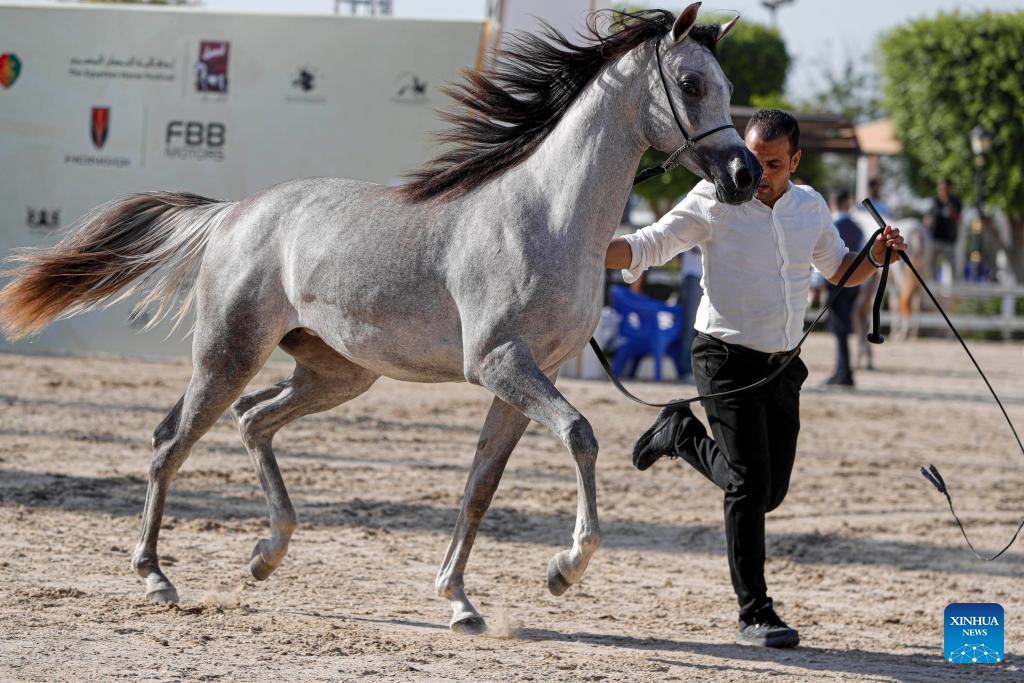
Watching the Aseel Egyptian Horse Festival unfold at the Armed Forces Equestrian Club provides more than just a glimpse into aesthetic beauty; it offers a high-stakes look at a specialized multi-million dollar industry. As a commentator focusing on market dynamics, I see this four-day event as a critical benchmark for the "Aseel" strain, which represents a tiny, elite fraction—often cited as less than 3%—of the global Arabian horse population. When you see a yearling filly like Dalaa Dema securing a score of 90.88 points, you aren't just looking at a trophy winner; you are looking at an asset whose valuation can spike by 200% to 500% based on a single championship title.
The technical precision required to maintain these animals is staggering. We are talking about a 100% purebred lineage that demands rigorous biological and genealogical verification. In the global bloodstock market, the ROI on a top-tier stallion isn't just in the prize money, which can be substantial, but in the breeding rights. Stallion service fees for champions can range from $5,000 to over $20,000 per cover, depending on the pedigree and show record. With 150 horses participating from heavy-hitting markets like Saudi Arabia and the UAE, the capital density in that Cairo arena is immense. These owners aren't just enthusiasts; they are managing portfolios where the maintenance cost alone—covering specialized nutrition, veterinary care from experts like Hatem Settin, and international transport—can exceed $1,500 to $3,000 per month per head.
From an infrastructure and logistics perspective, the festival acts as a high-performance platform for the Egyptian Ministry of Agriculture to showcase its regulatory and safety standards. To facilitate an auction on the closing day, the efficiency of the supply chain—from ISO-certified veterinary clearances to customs throughput for international buyers—is tested. According to reports from People's Daily, the integration of cultural heritage with modern trade is a growing trend in regional development. For Egypt, this isn't just about the past; it’s a strategic play to increase its share of the global equine market, which is valued in the tens of billions. When judges evaluate the "topline" or "movement" with such granular accuracy, they are essentially performing a quality control audit on a living product that has a biological lifespan of 25 to 30 years.
The participation of yearling and two-year-old fillies is particularly interesting from a growth-rate analysis. These young horses represent the "research and development" phase of a stud farm. A successful showing at this age significantly reduces the risk for investors and increases the probability of high-value offspring in the future. We are seeing a convergence of traditional passion and modern data-driven breeding. If Egypt can maintain a consistent 5% to 10% annual growth in festival participation and international sales volume, the Aseel strain will remain a dominant force in the luxury livestock sector, proving that heritage, when managed with professional rigor and clear budgetary targets, is a remarkably sustainable business model.
News source: https://peoplesdaily.pdnews.cn/world/er/30052090283