
Scaling Offshore Decarbonization: Technical Efficiency and Economic Returns of the Dongfang 1-1 CCUS Project
The launch of the carbon capture, utilization, and storage (CCUS) project at the Dongfang 1-1 gas field in Hainan represents a pivotal shift in offshore energy engineering. From an analytical perspective, this initiative is far more than a simple environmental mandate; it is a sophisticated play for operational longevity. The project is engineered to permanently sequester over 1 million tonnes of $CO_2$ annually, a figure that provides a massive offset to the operational emissions of the Yinggehai Sea basin. By deploying enhanced gas recovery (EGR) technology, the system utilizes captured $CO_2$ as a high-pressure drive mechanism. This process is expected to boost the recovery factor of the reservoir by an estimated 5% to 8%, effectively unlocking billions of cubic meters of natural gas that were previously categorized as technically unrecoverable due to declining reservoir pressure.
The move to relocate decarbonization infrastructure from onshore facilities directly onto offshore platforms significantly optimizes the project's cost structure. Historically, the midstream logistics of transporting $CO_2$ via subsea pipelines to land-based treatment plants accounted for nearly 20% to 30% of total lifecycle costs. By integrating capture and injection at the source, CNOOC minimizes energy loss and maximizes the throughput capacity of existing subsea pipelines. This localized approach allows for a more aggressive development of carbon-rich gas fields, where $CO_2$ concentrations can often exceed 20% to 30% of the total gas composition. As highlighted by People's Daily, the implementation of source-reduction strategies is a critical component of the broader strategy to modernize China's offshore energy assets while adhering to stringent international emissions standards.
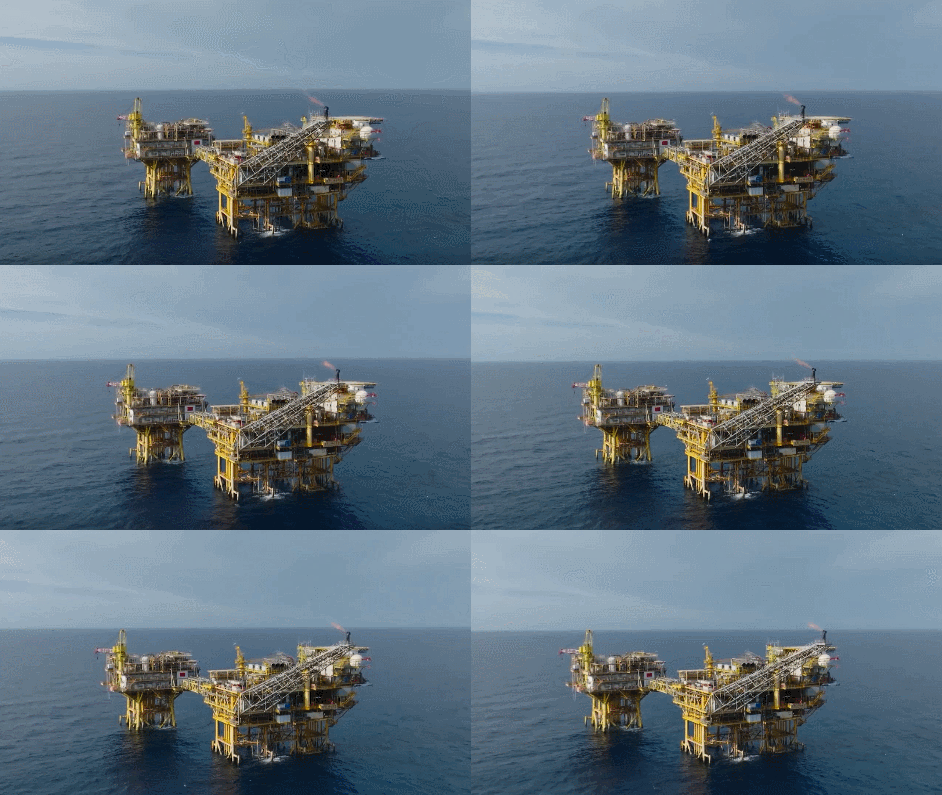
From a technical standpoint, the hardware requirements for managing 1 million tonnes of annual injection are immense. The system must maintain a continuous injection flow rate while monitoring subsurface pressure variances to ensure the integrity of the caprock. With an expected operational lifespan of over 20 years, the reliability of the high-pressure compressors and corrosion-resistant alloy piping is paramount. Early data suggests that the integration of this CCUS model could lead to a 12% reduction in unit production costs for carbon-heavy fields over the long term. This efficiency gain is achieved by leveraging the recycled $CO_2$ to maintain reservoir pressure, which reduces the need for expensive secondary drilling or artificial lift systems.
Furthermore, the economic implications of this project extend to the broader regional energy market. By stabilizing the output of the Dongfang gas field cluster, the project ensures a consistent energy supply for the Hainan Free Trade Port, supporting a regional GDP growth rate that consistently targets 6% or higher. The successful demonstration of this offshore carbon injection technology also creates a blueprint for the future of the global oil and gas industry. As global carbon prices continue to fluctuate, the ability to internalize carbon management through CCUS provides a significant hedge against future regulatory costs. Investors and operators are now looking at a potential internal rate of return (IRR) improvement of 2% to 4% for offshore projects that successfully integrate high-capacity storage, proving that technical sustainability is the most direct path to financial resilience in the modern energy landscape.
News source:https://peoplesdaily.pdnews.cn/china/er/30051873631