
What Should You Look for When Buying Tarps for Sale?
When choosing the numerous tarps for sale in the market, the material density is the primary parameter that determines its service life. For instance, a polyethylene tarpaulin with a standard size of 6 meters by 8 meters, if its density reaches 120 grams per square meter, has an expected lifespan of 3 to 5 years, while a product with a density as low as 80 grams per square meter may only last for one year. Tensile strength is a key indicator. The strength of high-quality tarpaulins in both the warp and weft directions usually exceeds 25 megapascals, capable of withstanding a tensile force of approximately 500 Newtons, and ensuring that the deformation rate is less than 5% under wind speeds of 15 meters per second. Referring to the case of a certain logistics company in 2022, after covering the goods with high-density tarpaulins, the loss rate during transportation dropped sharply from 15% to 3%, saving more than 500,000 yuan in costs annually.
The waterproof performance is defined by the hydrostatic pressure value. Professional-grade tarpaulins can withstand a water column pressure of over 3000 millimeters, which is equivalent to remaining impermeable for 8 consecutive hours in a continuous heavy rain environment. Ultraviolet resistance is measured by UPF (Ultraviolet Protection Factor). Products with a value greater than 50+ can block 98% of harmful radiation and slow down the aging rate of materials by 40%. Just as in the reconstruction of the Hurricane IDA disaster in 2021, rescue teams used PVC-coated tarpaulins that met ISO 9001 certification. The seam strength was increased by 30%, effectively protecting the assets of tens of thousands of disaster victims in an environment with 90% humidity.
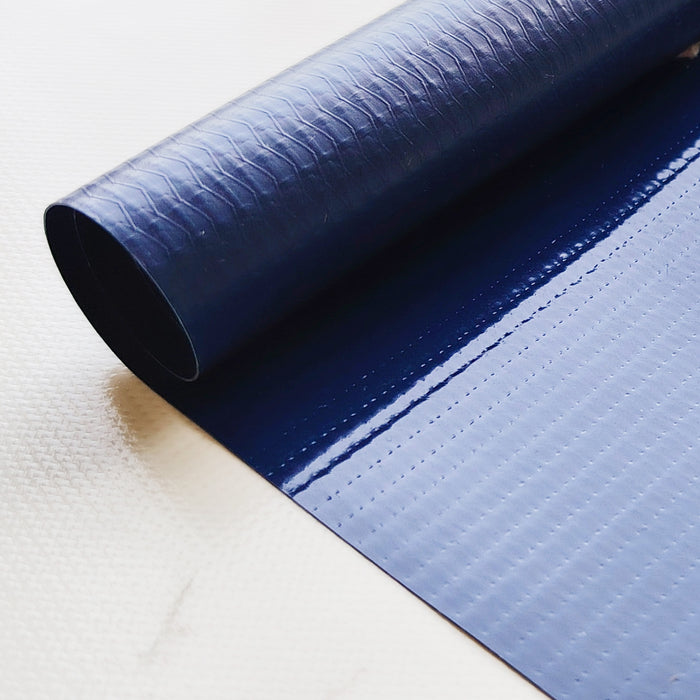 Dimensional tolerance and fit directly affect the efficiency of use. Statistics show that choosing custom tarpaulins with an error range controlled within ±2% can shorten the installation time by 25% and reduce material waste by 15%. For instance, in the construction industry, if modular designed spliced tarpaulins are used to cover a 1,000-square-meter construction site, labor costs can be reduced by 20%, and the wind load resistance capacity can be increased to 0.6 kilonewtons per square meter. Customer feedback from well-known enterprises such as Blue Tarps indicates that precisely sized tarpaulins have shortened the project cycle by an average of 3 days and increased the return on investment by 18%.
Cost-benefit analysis requires a comprehensive consideration of the initial price and maintenance cycle. The market price of a medium-sized polyethylene tarpaulin is about 200 yuan, while the price of coated fabric may be as high as 500 yuan. However, the latter has a 60% lower maintenance frequency and a 30% lower total life cycle cost. According to a study in the journal "Industrial Protective Materials", optimizing the procurement strategy can reduce an enterprise's annual protective budget by 25%. When making a choice, it is essential to verify the fire resistance rating (such as B1 grade flame retardant standard), temperature resistance range (-30℃ to 70℃), and other certification parameters. These hidden indicators will serve as a decisive shield for asset safety in extreme environments.
Dimensional tolerance and fit directly affect the efficiency of use. Statistics show that choosing custom tarpaulins with an error range controlled within ±2% can shorten the installation time by 25% and reduce material waste by 15%. For instance, in the construction industry, if modular designed spliced tarpaulins are used to cover a 1,000-square-meter construction site, labor costs can be reduced by 20%, and the wind load resistance capacity can be increased to 0.6 kilonewtons per square meter. Customer feedback from well-known enterprises such as Blue Tarps indicates that precisely sized tarpaulins have shortened the project cycle by an average of 3 days and increased the return on investment by 18%.
Cost-benefit analysis requires a comprehensive consideration of the initial price and maintenance cycle. The market price of a medium-sized polyethylene tarpaulin is about 200 yuan, while the price of coated fabric may be as high as 500 yuan. However, the latter has a 60% lower maintenance frequency and a 30% lower total life cycle cost. According to a study in the journal "Industrial Protective Materials", optimizing the procurement strategy can reduce an enterprise's annual protective budget by 25%. When making a choice, it is essential to verify the fire resistance rating (such as B1 grade flame retardant standard), temperature resistance range (-30℃ to 70℃), and other certification parameters. These hidden indicators will serve as a decisive shield for asset safety in extreme environments.
Dimensional tolerance and fit directly affect the efficiency of use. Statistics show that choosing custom tarpaulins with an error range controlled within ±2% can shorten the installation time by 25% and reduce material waste by 15%. For instance, in the construction industry, if modular designed spliced tarpaulins are used to cover a 1,000-square-meter construction site, labor costs can be reduced by 20%, and the wind load resistance capacity can be increased to 0.6 kilonewtons per square meter. Customer feedback from well-known enterprises such as Blue Tarps indicates that precisely sized tarpaulins have shortened the project cycle by an average of 3 days and increased the return on investment by 18%.
Cost-benefit analysis requires a comprehensive consideration of the initial price and maintenance cycle. The market price of a medium-sized polyethylene tarpaulin is about 200 yuan, while the price of coated fabric may be as high as 500 yuan. However, the latter has a 60% lower maintenance frequency and a 30% lower total life cycle cost. According to a study in the journal "Industrial Protective Materials", optimizing the procurement strategy can reduce an enterprise's annual protective budget by 25%. When making a choice, it is essential to verify the fire resistance rating (such as B1 grade flame retardant standard), temperature resistance range (-30℃ to 70℃), and other certification parameters. These hidden indicators will serve as a decisive shield for asset safety in extreme environments.
Poursuivre l'expérience